A2L refrigerants are becoming the new industry standard for commercial refrigeration as businesses move toward safer, more energy efficient and environmentally responsible systems. These refrigerants have low global warming potential and mild flammability, making them suitable for modern cooling requirements. Advantage Refrigeration understands how A2L adoption affects system design, technician handling and long term planning, which is why many businesses choose experienced refrigeration specialists to support the transition.
Working with knowledgeable experts helps determine whether existing refrigeration units can operate with A2L refrigerants or if full replacement offers a better long term solution.
What Is an A2L Refrigerant?
An A2L refrigerant belongs to a classification that indicates low global warming potential and mild flammability. It can pose a small ignition risk under certain conditions, which means technicians need to follow proper handling procedures. Certified technicians use containment protocols and adhere to industry standards to manage these refrigerants safely.
Most A2L refrigerants derive from HFO technology. Manufacturers developed these to meet environmental performance goals while still providing effective cooling for commercial applications.
Why A2L Is Replacing Older Refrigerants
Older refrigerants such as R 404A and R 134a carry a high global warming potential and contribute to regulatory restrictions. Industry standards promote the shift toward more sustainable solutions, which drives businesses to select A2L refrigerants.
By switching to A2L, operators reduce emissions and prepare their refrigeration systems for upcoming compliance requirements.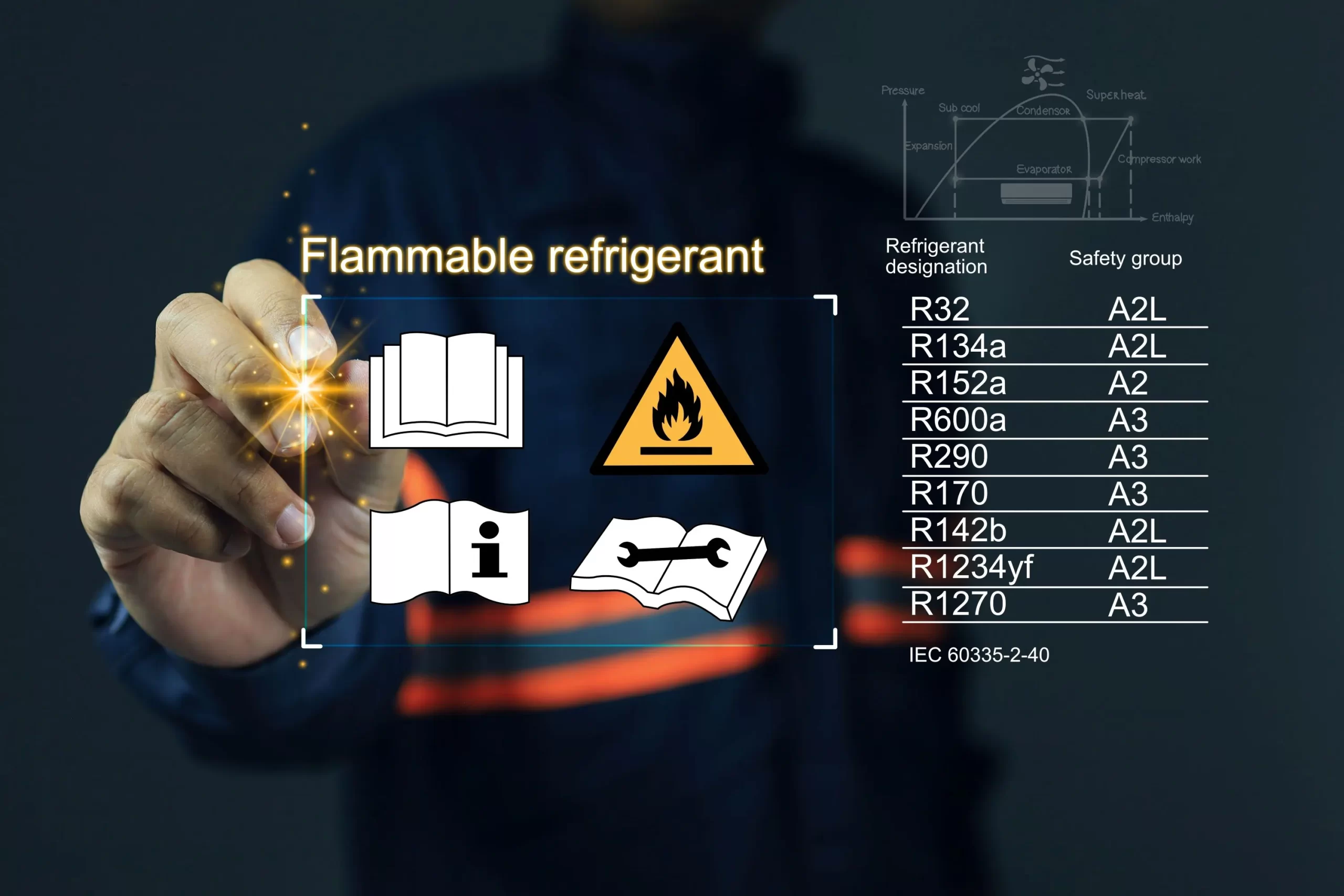
How A2L Differs From R 404A and R 134a
-
Environmental impact
A2L refrigerants provide much lower GWP than legacy options and support environmental targets. -
Safety considerations
Traditional refrigerants do not carry flammability concerns. A2L blends require control measures but remain safe for commercial use when installed within approved systems. -
Operating performance
Many A2L refrigerants improve energy efficiency, which helps businesses lower running costs over time.
These differences often influence whether a facility modifies existing systems or installs new equipment.
Safety and Technician Handling Requirements
Technicians must hold appropriate certifications to work with A2L refrigerants. They evaluate ventilation, system pressure tolerance and leak detection systems before installation. Because of the mild flammability rating, they implement safety procedures to mitigate ignition risk.
Operators should schedule regular inspection, leak monitoring and maintenance to protect overall system integrity and maintain safety standards.
System Retrofit or Full Replacement
Some refrigeration systems can accommodate A2L refrigerants through retrofitting. Others need full replacement if they fail to meet safety or performance requirements. Technicians assess equipment age, condition and capability before recommending a direction.
Choosing the right strategy early helps businesses prevent sudden failures and plan in alignment with system lifecycle goals.
Environmental Compliance and Regulation
A2L refrigerants support current environmental regulations by reducing emissions. Government policies encourage transitioning away from high GWP refrigerants, and businesses that start early avoid sudden compliance pressure.
Planning upgrades proactively also improves budget control and limits the need for emergency replacement.
What Commercial Operators Should Do Next
Commercial operators should evaluate current refrigeration systems and determine whether adapting existing equipment or moving to A2L ready systems is more cost effective. Advantage Refrigeration provides the insight needed to plan upgrades, address safety considerations and align with compliance requirements.
If you are ready to assess refrigeration readiness and environmental performance, request an inspection with the Advantage Refrigeration team.