
Commercial facilities rely on consistent hot water for operations, sanitation, and customer service. Tankless and traditional storage-tank water heaters both meet these needs, but they differ in how they produce hot water, how much space they require, and how they perform under heavy demand. Understanding these differences helps restaurants, hotels, and foodservice operators choose systems that align with usage patterns and infrastructure. These system types are evaluated as part of the mechanical engineering services provided by Advantage Refrigeration.
How Traditional Storage-Tank Water Heaters Work
Traditional commercial water heaters store a set volume of heated water in an insulated tank. Burners or electric elements maintain temperature so hot water is available when fixtures open.
When demand exceeds stored capacity, the tank must refill and reheat, which can lead to temporary temperature drops. Recovery rate determines how quickly the system can restore supply.
How Tankless Water Heaters Work
Tankless, or on-demand, systems heat water as it flows through the unit. Burners or electric elements activate only when water is needed, rather than keeping a full tank hot.
Because water is heated continuously as it passes through, tankless systems do not run out of stored hot water. Output, however, is limited by the unit’s flow capacity.
Upfront Installation Cost
Traditional tank systems often have lower initial equipment cost and simpler installation, especially when replacing existing tank units.
Tankless systems may require higher upfront investment due to equipment cost, venting requirements, gas supply upgrades, or electrical capacity increases.
Energy Efficiency Differences
Tank systems consume energy to maintain stored water temperature, even during low demand periods. This standby heat loss reduces overall efficiency.
Tankless units operate only when hot water is used, which can improve efficiency in facilities with variable demand. However, efficiency gains depend on correct sizing and usage patterns.
Space and Footprint
Storage-tank heaters require floor space for the tank and clearance for service. In tight mechanical rooms, this footprint can limit layout flexibility.
Tankless units mount on walls and generally occupy less floor area. This can benefit facilities where mechanical space is limited.
Performance in High-Demand Kitchens
Commercial kitchens often experience simultaneous high-flow demands from dishwashers, sinks, and prep stations. Storage tanks provide a buffer of preheated water that can handle short bursts of peak usage.
Tankless systems can support high demand if multiple units are installed in parallel. Without proper sizing, flow limits can lead to reduced output temperature during peak use.
Use in Hotels and Multi-Fixture Facilities
Hotels and large facilities have predictable peak demand periods. Tank systems can handle these loads when sized for occupancy and recovery rate.
Tankless systems can work well in modular configurations, allowing staged capacity. This supports scalability as facility demand changes.
Maintenance and Longevity
Tank systems may require periodic flushing and inspection to manage sediment buildup. Tank components also experience wear due to constant heating cycles.
Tankless systems require regular descaling in hard water conditions and maintenance of heat exchangers. Both system types depend on water quality and service practices for longevity.
Choosing the Right System
Selection depends on demand pattern, available fuel or power, mechanical space, and long-term operating cost goals. Facilities with steady high demand may benefit from storage capacity, while variable demand sites may see efficiency gains from on-demand heating.
Facility planning and system selection are often coordinated with commercial mechanical engineering specialists to ensure proper sizing and integration.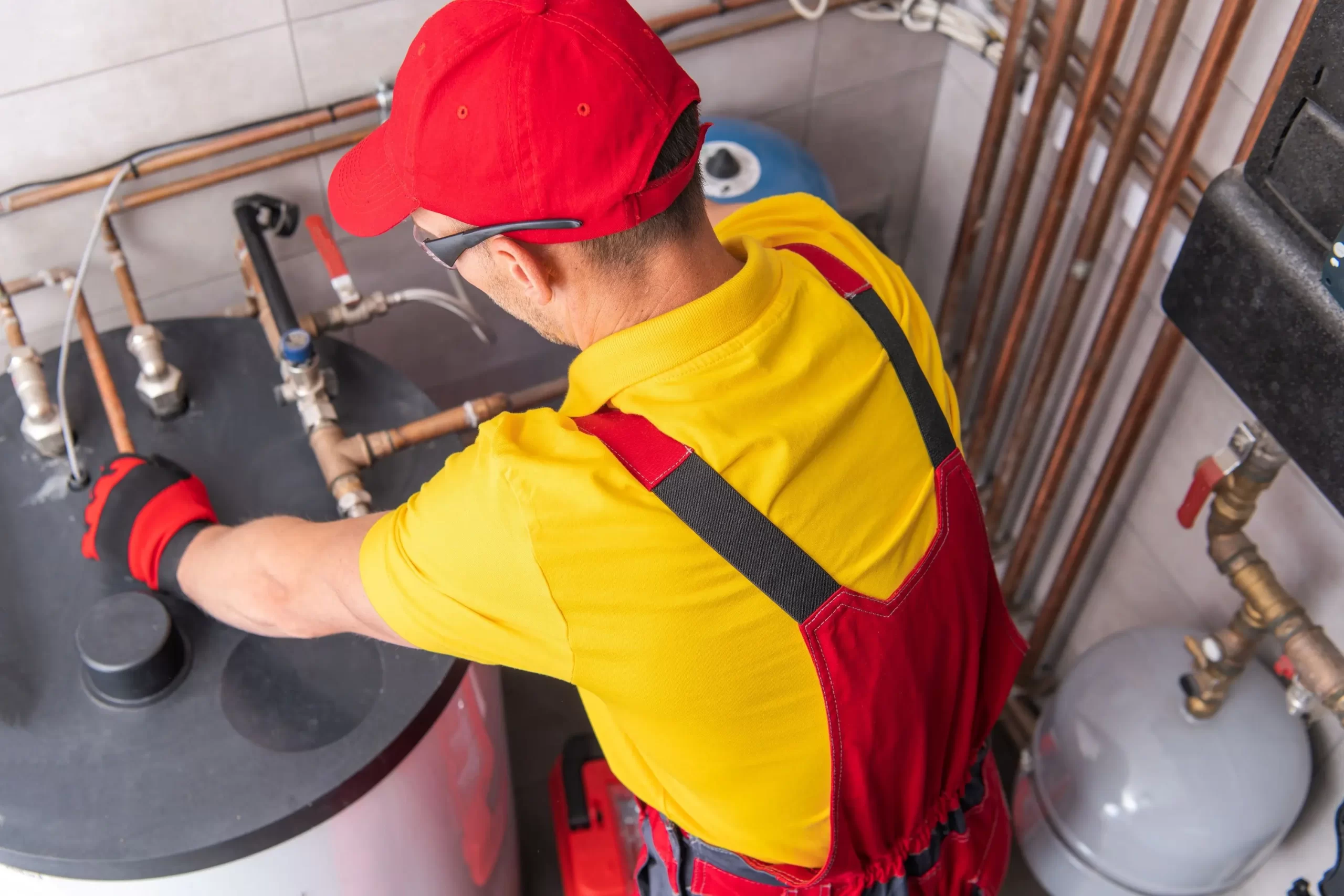
Planning Upgrades for Commercial Facilities
Upgrading water heating systems requires assessment of load requirements, code compliance, and existing infrastructure. Restaurants, hotels, and foodservice operators can begin discussions through the service inquiry page to evaluate tankless and traditional system options.